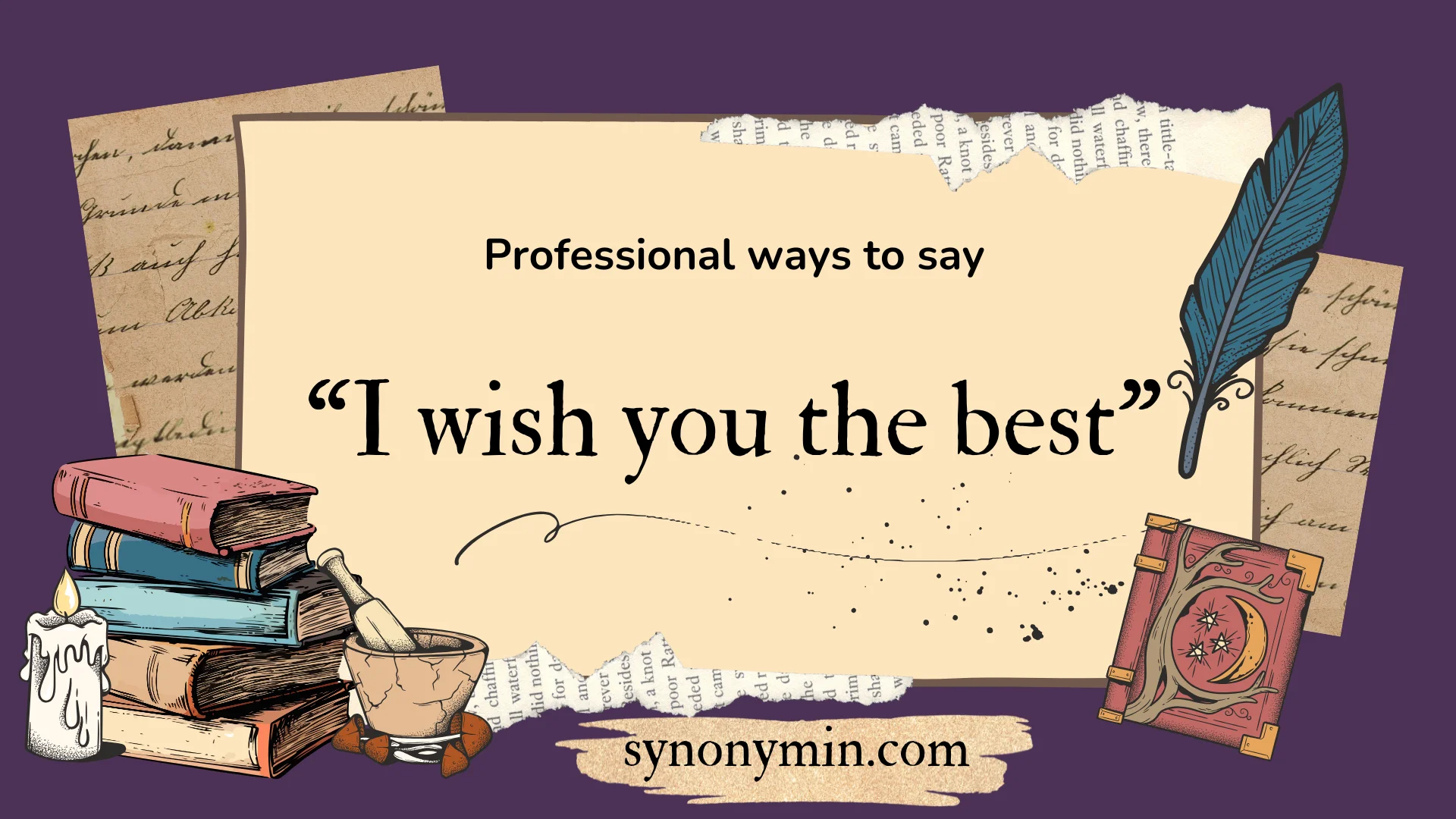
In professional communication, tone matters as much as content. Phrases like “I wish you the best” are warm and positive but can sound vague, overused, or too informal in certain contexts. Whether you’re sending off a departing colleague, closing a client email, or writing a formal message of support, having precise, polished alternatives helps you express goodwill with clarity and credibility.
The following guide offers 35+ refined, workplace-appropriate versions of “I wish you the best,” complete with meanings, examples, and notes on when each one works best.
When Should You Use These Alternatives?
Use professional alternatives to “I wish you the best” when:
- You want a tone that fits corporate communication.
- You’re writing to clients, executives, or new professional connections.
- You need a phrase that sounds intentional rather than generic.
- You’re expressing support, appreciation, or encouragement with nuance.
Professional Alternatives to “I Wish You the Best” (With Meanings & Examples)
1. “Wishing you continued success.”
Meaning: You hope their progress keeps moving in a positive direction.
Example: Wishing you continued success as you transition into your new role.
Why it works: Respectful, professional, and success-focused.
2. “I’m confident you’ll excel moving forward.”
Meaning: You believe strongly in their abilities.
Example: I’m confident you’ll excel moving forward with this new opportunity.
Why it works: Conveys encouragement backed by trust.
3. “Best of luck with your upcoming projects.”
Meaning: A polished way to wish good fortune in specific tasks.
Example: Best of luck with your upcoming projects this quarter.
Why it works: Relevant and work-focused.
4. “Wishing you great outcomes ahead.”
Meaning: You hope future results turn out well.
Example: Wishing you great outcomes ahead in the next phase of development.
Why it works: Sounds modern and optimistic.
5. “I hope the next chapter brings you success.”
Meaning: Supportive sentiment for transitions.
Example: I hope the next chapter brings you success and fulfillment.
Why it works: Ideal for farewells or career moves.
6. “You have my full support moving forward.”
Meaning: Shows confidence and willingness to help.
Example: You have my full support moving forward with this initiative.
Why it works: Professional and collaborative.
7. “Wishing you positive momentum.”
Meaning: You want them to gain progress and energy.
Example: Wishing you positive momentum as you build your new team.
Why it works: Sounds fresh and business-oriented.
8. “I’m excited to see what you accomplish next.”
Meaning: You expect impressive results in their future.
Example: I’m excited to see what you accomplish next with this launch.
Why it works: Shows genuine enthusiasm.
9. “May your efforts lead to outstanding results.”
Meaning: You hope their work pays off.
Example: May your efforts lead to outstanding results in Q4.
Why it works: Formal and impactful.
10. “Wishing you growth and success.”
Meaning: A broad but polished well-wish.
Example: Wishing you growth and success in this new capacity.
Why it works: Professional and motivational.
11. “Here’s to a successful transition.”
Meaning: You support someone moving roles, teams, or companies.
Example: Here’s to a successful transition into your new position.
Why it works: Perfect for career changes.
12. “Sending you my best as you move forward.”
Meaning: Warm but still formal.
Example: Sending you my best as you move forward with your next steps.
Why it works: Neutral and widely applicable.
13. “Wishing you success in all your upcoming endeavors.”
Meaning: Best wishes for multiple future pursuits.
Example: Wishing you success in all your upcoming endeavors at your new company.
Why it works: Elegant and polished.
14. “I hope your hard work continues to pay off.”
Meaning: You acknowledge their efforts.
Example: I hope your hard work continues to pay off in the upcoming phase.
Why it works: Encouraging and appreciative.
15. “Wishing you every success with this initiative.”
Meaning: A focused, professional wish.
Example: Wishing you every success with this initiative and its rollout.
Why it works: Sounds direct and corporate-friendly.
16. “May this opportunity bring you meaningful growth.”
Meaning: You hope they develop professionally or personally.
Example: May this opportunity bring you meaningful growth.
Why it works: Sophisticated and thoughtful.
17. “I look forward to seeing your continued progress.”
Meaning: You expect them to keep improving.
Example: I look forward to seeing your continued progress in the coming months.
Why it works: Positive and forward-looking.
18. “Wishing you great success as you move ahead.”
Meaning: A polished, versatile alternative.
Example: Wishing you great success as you move ahead with the expansion.
Why it works: Clear and universally appropriate.
19. “I’m hopeful this next step brings excellent results.”
Meaning: You expect good outcomes from their new move.
Example: I’m hopeful this next step brings excellent results for you.
Why it works: Professional yet warm.
20. “May you achieve everything you’re working toward.”
Meaning: You’re rooting for their goals.
Example: May you achieve everything you’re working toward in the upcoming cycle.
Why it works: Encouraging and respectful.
21. “Wishing you a rewarding experience ahead.”
Meaning: You hope their upcoming work feels fulfilling.
Example: Wishing you a rewarding experience ahead with this collaboration.
Why it works: Ideal for long-term projects.
22. “I admire your dedication and wish you ongoing success.”
Meaning: Commends their effort while wishing them well.
Example: I admire your dedication and wish you ongoing success in your leadership role.
Why it works: Effective for praising colleagues or employees.
23. “I’m confident this new role will serve you well.”
Meaning: Trust in their fit for a new position.
Example: I’m confident this new role will serve you well.
Why it works: Reassuring and supportive.
24. “Wishing you all the success this opportunity has to offer.”
Meaning: A strong endorsement of their new journey.
Example: Wishing you all the success this opportunity has to offer.
Why it works: Grand yet still professional.
25. “I hope this new path brings meaningful achievements.”
Meaning: Encourages purposeful progress.
Example: I hope this new path brings meaningful achievements for you.
Why it works: Calm, modern, and polished.
26. “Wishing you the very best as you take this next step.”
Meaning: A refined, fuller version of the original phrase.
Example: Wishing you the very best as you take this next step in your career.
Why it works: Professional but warm.
27. “I look forward to seeing your impact.”
Meaning: You believe they will contribute meaningfully.
Example: I look forward to seeing your impact on the team.
Why it works: Confident and empowering.
28. “Wishing you clarity and success in your decisions.”
Meaning: Encourages confidence in leadership or strategy.
Example: Wishing you clarity and success in your decisions moving forward.
Why it works: Strong for executives or decision-makers.
29. “May your next steps open new doors for you.”
Meaning: You hope their journey creates opportunities.
Example: May your next steps open new doors for you professionally.
Why it works: Uplifting and forward-focused.
30. “Wishing you strong results in the months ahead.”
Meaning: Encourages measurable success.
Example: Wishing you strong results in the months ahead as the project evolves.
Why it works: Especially good for corporate or performance settings.
31. “Your future efforts are sure to bring success.”
Meaning: Confidence that they will do well.
Example: Your future efforts are sure to bring success to the organization.
Why it works: Supportive and complimentary.
32. “May you find success in every challenge ahead.”
Meaning: Encourages resilience.
Example: May you find success in every challenge ahead.
Why it works: Strong, uplifting tone.
33. “Wishing you fulfillment in what comes next.”
Meaning: You hope they feel satisfied and happy.
Example: Wishing you fulfillment in what comes next for your career.
Why it works: Personal yet still professional.
34. “I hope your next opportunity brings you great value.”
Meaning: You hope the next step benefits them.
Example: I hope your next opportunity brings you great value and growth.
Why it works: Balanced and business-appropriate.
35. “Wishing you confidence and success in this transition.”
Meaning: Encourages strength through change.
Example: Wishing you confidence and success in this transition.
Why it works: Excellent for reorganizations or role changes.
36. “I trust this move will lead to meaningful progress.”
Meaning: Shows belief in the strategic value of their decision.
Example: I trust this move will lead to meaningful progress for you.
Why it works: Executive-friendly phrasing.
37. “Wishing you prosperity in your next chapter.”
Meaning: You want them to thrive materially or professionally.
Example: Wishing you prosperity in your next chapter.
Why it works: Refined and inspirational.
Quick One-Line Templates
- Wishing you continued success in the next phase of your work.
- I’m confident you’ll make a strong impact in your new role.
- Best of luck with your upcoming projects.
- Wishing you great success as you move ahead.
- I look forward to seeing your growth in the months ahead.
- Sending you my best as you transition to this new opportunity.
- Wishing you clarity and confidence in your next steps.
Common Mistakes to Avoid
- Being too vague – General wishes can feel impersonal.
- Using overly emotional language – Keep business communication professional.
- Sounding repetitive – Avoid using the same phrase in every email.
- Using clichés – Corporate messages benefit from fresh, intentional wording.
- Adding unnecessary sentiment – Keep it concise unless the situation calls for warmth.
FAQ
1. Is “I wish you the best” unprofessional?
Not necessarily, but it can feel generic. A tailored alternative often sounds more polished.
2. Which version works best for emails to clients?
Phrases like “Wishing you continued success” or “Best of luck with your upcoming projects” are ideal.
3. What should I say when someone changes jobs?
Try: “Here’s to a successful transition into your new role.”
4. Can I use these phrases in formal letters?
Yes—most entries here are refined enough for formal documents and corporate communication.
5. What’s a short alternative for a quick message?
“Wishing you continued success” is concise and always appropriate.
Conclusion
Professional alternatives to “I wish you the best” allow you to express encouragement with intention, clarity, and respect. Whether you’re corresponding with colleagues, clients, or new contacts, the right phrase elevates your message and leaves a lasting, polished impression. Use these expressions to craft communication that’s sincere, modern, and confidently professional—every single time.
DISCOVER MORE ARTICLES
Formal Synonyms for “Special Thanks”: 40+ Professional Alternatives
30 Professional Ways to Tell Your Boss You Got Another Job Offer
25+ Other Ways to Say “Please Let Me Know If I Missed Anything”