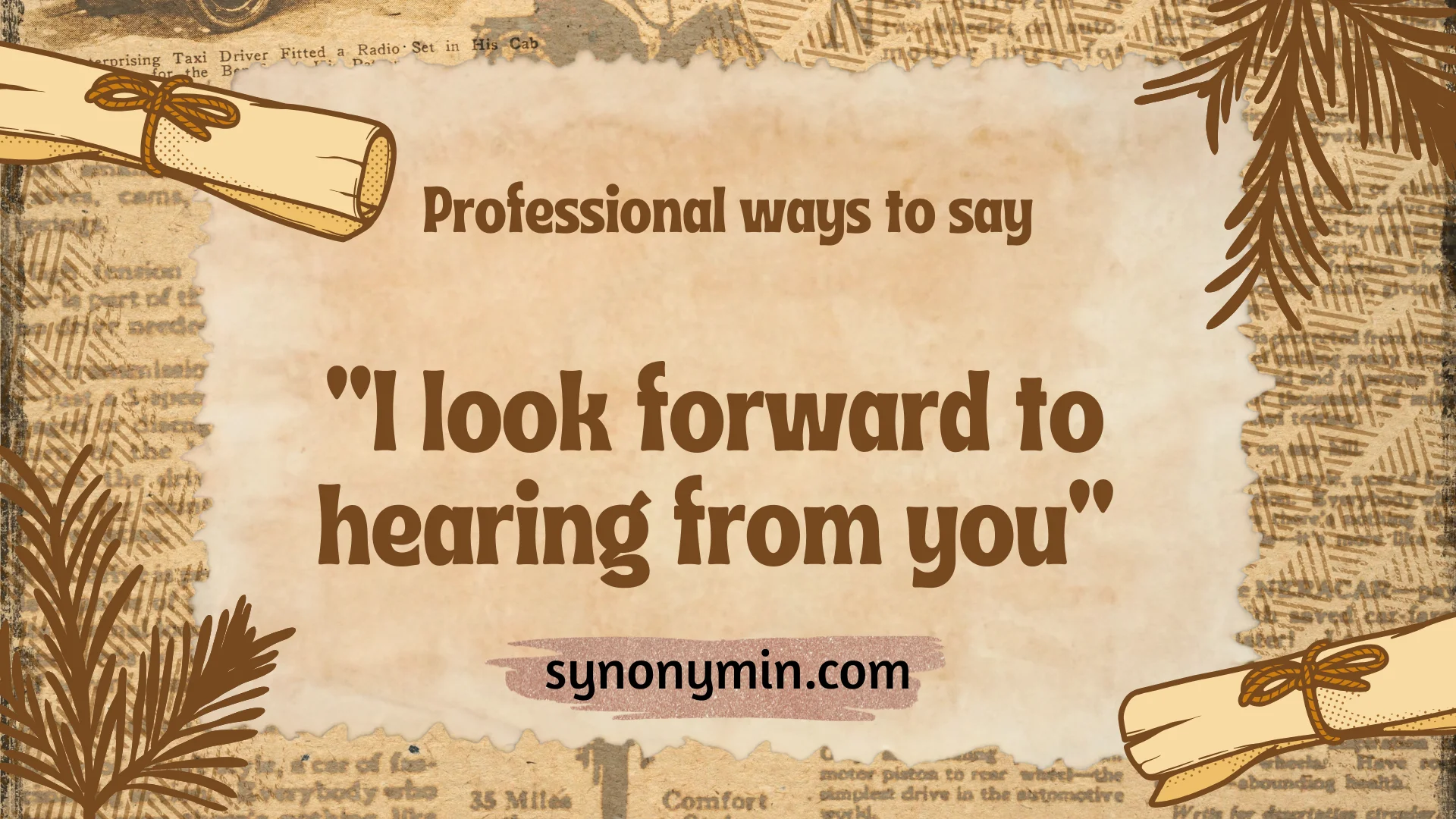
In professional communication, few phrases are as common—and overused—as “I look forward to hearing from you.” It appears in emails to clients, managers, colleagues, and partners. But while it’s polite, it can sometimes feel predictable, passive, or overly formal if repeated too often.
This guide gives you 30+ professional, modern, and natural alternatives to “I look forward to hearing from you”—each with examples, explanations, and usage notes.
When Should You Use These Alternatives?
Different closing lines work best in different contexts:
When you need a prompt response
Use confident, proactive phrases like
- “I appreciate your timely response…”
- “I look forward to your feedback…”
When emailing clients or stakeholders
Choose formal, polished options like
- “I await your response…”
- “I look forward to your thoughts…”
When closing internal or team emails
Use simple, conversational closings such as
- “Let me know your thoughts…”
- “I look forward to connecting…”
When you need to sound assertive
Use results-focused phrases like
- “I look forward to moving ahead…”
- “I appreciate your confirmation…”
Choosing the right closing sets the tone and shapes how quickly people reply.
33 Professional Alternatives to “I Look Forward to Hearing From You”
Below are polished alternatives with meaning, examples, and notes on why they work.
1. I look forward to your response
Meaning: Polite, direct request for a reply.
Example: I look forward to your response regarding the proposal.
Why it works: Clear and professional without being pushy.
2. I appreciate your timely response
Meaning: Signals the need for prompt action.
Example: I appreciate your timely response so we can finalize the timeline.
Why it works: Encourages urgency respectfully.
3. I look forward to your feedback
Meaning: Ideal when seeking input, ideas, or approval.
Example: I look forward to your feedback on the draft.
Why it works: Invites collaboration.
4. I await your response
Meaning: Formal and direct.
Example: I await your response on the matter.
Why it works: Suitable for clients, HR, or legal communication.
5. I look forward to discussing this further
Meaning: Encourages continued communication or meetings.
Example: I look forward to discussing this further during our call.
Why it works: Shows initiative and interest.
6. Please let me know your thoughts
Meaning: Friendly and conversational.
Example: Please let me know your thoughts when convenient.
Why it works: Soft tone perfect for internal emails.
7. I look forward to your reply at your earliest convenience
Meaning: Respectful, formal, and slightly urgent.
Example: I look forward to your reply at your earliest convenience.
Why it works: Encourages a timely response without pressure.
8. I’m eager to hear your perspective
Meaning: Invites ideas or opinions.
Example: I’m eager to hear your perspective on this approach.
Why it works: Warm, open, and collaborative.
9. I appreciate your prompt attention to this
Meaning: Stronger urgency for time-sensitive matters.
Example: I appreciate your prompt attention to this request.
Why it works: Efficient and professional.
10. I look forward to your confirmation
Meaning: Used when expecting approval or a final answer.
Example: I look forward to your confirmation of the meeting time.
Why it works: Clear, actionable closing.
11. Please keep me updated
Meaning: Shows you expect progress updates.
Example: Please keep me updated on the next steps.
Why it works: Simple and direct.
12. I look forward to continuing our conversation
Meaning: Builds rapport and keeps communication open.
Example: I look forward to continuing our conversation next week.
Why it works: Warm and relationship-focused.
13. I look forward to your insights
Meaning: Ideal for expert opinions or strategic discussions.
Example: I look forward to your insights on the report.
Why it works: Shows respect for the recipient’s expertise.
14. I await your guidance
Meaning: Useful when waiting for instructions.
Example: I await your guidance on how to proceed.
Why it works: Polite and deferential.
15. I welcome your thoughts
Meaning: Invites input without pressure.
Example: I welcome your thoughts whenever you have a moment.
Why it works: Friendly and inclusive.
16. Looking forward to connecting soon
Meaning: Good for scheduling meetings or networking.
Example: Looking forward to connecting soon.
Why it works: Short, modern, and conversational.
17. I appreciate your cooperation
Meaning: Useful for multi-step or compliance-related requests.
Example: I appreciate your cooperation as we finalize the audit.
Why it works: Professional and appreciative.
18. I look forward to moving ahead
Meaning: Signals readiness to proceed.
Example: I look forward to moving ahead once I receive your approval.
Why it works: Confident and proactive.
19. Please advise
Meaning: Requests direction or decisions.
Example: Please advise on the next steps.
Why it works: Short and highly professional.
20. I look forward to your decision
Meaning: Use when awaiting a final verdict.
Example: I look forward to your decision regarding the proposal.
Why it works: Polite yet firm.
21. Your response would be greatly appreciated
Meaning: Polite and respectful.
Example: Your response would be greatly appreciated at your earliest convenience.
Why it works: Gentle, courteous closing.
22. I appreciate any updates you can share
Meaning: Asks for progress reports.
Example: I appreciate any updates you can share on the request.
Why it works: Easygoing and non-demanding.
23. I hope to hear from you soon
Meaning: Neutral, warm, and familiar.
Example: I hope to hear from you soon regarding the details.
Why it works: Friendly without being overly formal.
24. I look forward to hearing your thoughts
Meaning: Invites discussion or opinions.
Example: I look forward to hearing your thoughts on the proposal.
Why it works: Collaborative and open-ended.
25. I’m looking forward to your update
Meaning: Warm yet clear expectation.
Example: I’m looking forward to your update on the progress.
Why it works: Perfect for ongoing projects.
26. I anticipate your response
Meaning: Formal and confident.
Example: I anticipate your response shortly.
Why it works: Ideal for professional or executive communication.
27. I look forward to your cooperation
Meaning: Useful for requests that require action.
Example: I look forward to your cooperation in completing the required documents.
Why it works: Direct and dependable.
28. Your timely reply will be extremely helpful
Meaning: Communicates urgency politely.
Example: Your timely reply will be extremely helpful as we finalize arrangements.
Why it works: Emphasizes importance.
29. Please get back to me when you can
Meaning: Informal but still professional.
Example: Please get back to me when you can with the updated figures.
Why it works: Relaxed and approachable.
30. I appreciate hearing from you soon
Meaning: Encourages quicker response.
Example: I appreciate hearing from you soon regarding the next steps.
Why it works: Polite and forward-moving.
31. I look forward to your update on this matter
Meaning: Best for ongoing tasks or pending details.
Example: I look forward to your update on this matter.
Why it works: Shows consistent follow-up.
32. Please share your thoughts when you have a moment
Meaning: Respectful of the recipient’s time.
Example: Please share your thoughts when you have a moment.
Why it works: Gentle, accommodating tone.
33. I’ll await your confirmation
Meaning: Used for scheduling or approvals.
Example: I’ll await your confirmation of the meeting date.
Why it works: Clear and action-oriented.
Quick One-Line Templates
- “I look forward to your feedback on this.”
- “I appreciate your prompt response.”
- “Please let me know your thoughts when you can.”
- “I’ll await your confirmation.”
- “Your timely reply would be greatly appreciated.”
- “Looking forward to connecting soon.”
- “I appreciate any updates you can share.”
Common Mistakes to Avoid
Avoid these when replacing “I look forward to hearing from you”:
- Being vague (don’t say “let me know” without context)
- Sounding demanding or impatient
- Overusing the same closing line in every email
- Using overly casual closings for formal communication
- Adding unnecessary fluff before the closing sentence
FAQ
1. Is “I look forward to hearing from you” still acceptable?
Yes, but it is often overused. Using alternatives helps you sound more modern and intentional.
2. What should I use when emailing clients?
Use formal, polished options like “I appreciate your timely response” or “I look forward to your confirmation.”
3. What’s best for internal team communication?
Friendly phrases like “Please let me know your thoughts” work best.
4. What if I need an urgent reply?
Choose assertive yet polite closings such as “I appreciate your prompt attention to this.”
5. Should I use casual phrases in business emails?
Only if your workplace culture supports a relaxed tone.
6. Can I ask directly for a reply?
Yes—phrases like “Please advise” or “I look forward to your response” are appropriate.
Final Thoughts
Your closing line shapes how your message is received and how quickly people respond. By choosing smarter alternatives to “I look forward to hearing from you,” you communicate confidence, professionalism, and clarity. Use these modern phrases to elevate your emails and strengthen your workplace communication.
DISCOVER MORE ARTICLES
33+ Other Ways to Say “Clean Up After Yourself” (With Examples)
25+ Formal Ways to Ask “What Time Suits You Best?”
25+ Samples of Follow-Up Emails for a Letter of Recommendation