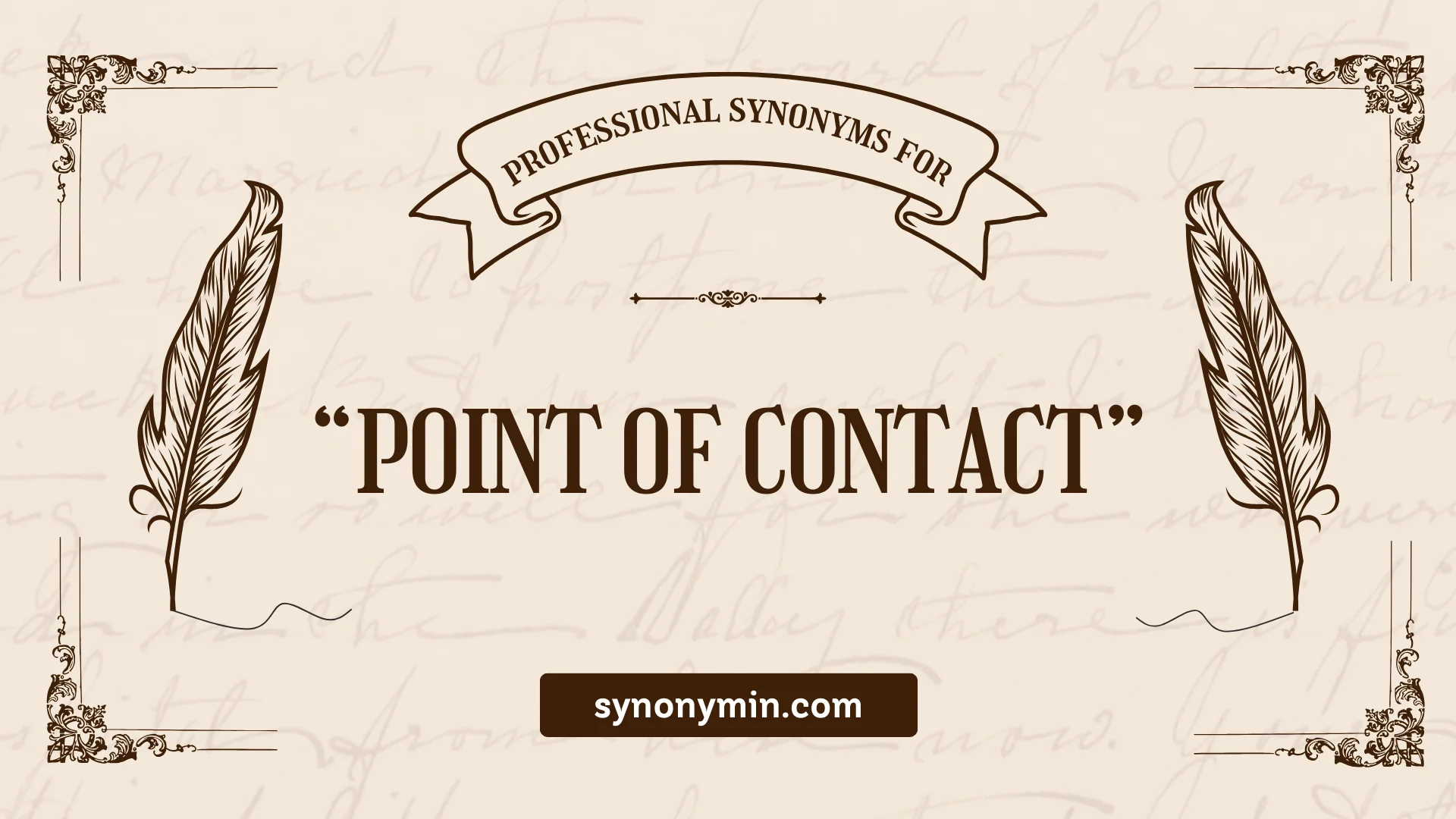
In business communication, the phrase “point of contact” is used constantly—whether you’re assigning responsibilities, directing customers, or clarifying roles. But relying on the same phrase repeatedly can make your communication sound repetitive or overly formal. Modern workplace language works best when it’s clear, precise, and natural.
This guide gives you 35 professional, modern, and effective alternatives for “point of contact”—each with meanings, examples, and notes on why the phrase works.
When Should You Use These Alternatives?
Different work situations require different levels of formality:
Client communication and external messages
Use:
- “Primary representative”
- “Designated liaison”
- “Account manager”
Internal updates or team workflows
Use:
- “Go-to person”
- “Main coordinator”
- “Responsible lead”
Formal documents, proposals, or contracts
Use:
- “Official correspondent”
- “Authorized contact”
- “Designated point person”
Choosing the right synonym ensures clarity and avoids misinterpretation across roles, teams, and organizations.
35 Professional Alternatives to “Point of Contact”
Below are polished, workplace-ready alternatives—with usage, examples, and quick explanations.
1. Primary Contact
Meaning: The main person responsible for communication.
Example: “Sarah will be your primary contact for onboarding.”
Why it works: Clear, direct, and universally understood.
2. Main Contact Person
Meaning: The central individual handling updates or inquiries.
Example: “John will serve as your main contact person during the project.”
Why it works: Simple, accessible, and customer-friendly.
3. Designated Representative
Meaning: An assigned representative for communication or decisions.
Example: “Our designated representative will follow up with next steps.”
Why it works: Ideal for formal or contract-based communication.
4. Liaison
Meaning: Someone who facilitates communication between groups.
Example: “Emma will act as the liaison between our teams.”
Why it works: Professional and widely accepted in corporate environments.
5. Primary Liaison
Meaning: The main bridge between departments or organizations.
Example: “Carlos will be your primary liaison for all partnership matters.”
Why it works: Sounds organized and authoritative.
6. Account Lead
Meaning: The person in charge of client or account management.
Example: “Your account lead will share the updated timelines shortly.”
Why it works: Strong for agencies, marketing, and service-based roles.
7. Account Manager
Meaning: The individual managing client relations and deliverables.
Example: “Sophie, your account manager, will handle your requests.”
Why it works: Clear and industry-standard.
8. Client Coordinator
Meaning: Person responsible for handling client interactions.
Example: “A client coordinator will assist you throughout the project.”
Why it works: Warm and service-oriented.
9. Project Coordinator
Meaning: Lead for organizing workflows and communication.
Example: “Your project coordinator will provide weekly status updates.”
Why it works: Ideal for internal and external project communication.
10. Project Lead
Meaning: The person overseeing the project.
Example: “Dana will be the project lead managing all communication.”
Why it works: Clear authority and responsibility.
11. Team Lead
Meaning: The leader responsible for directing team communication.
Example: “Your queries can be addressed to the team lead, Mark.”
Why it works: Strong for internal structures.
12. Go-To Person
Meaning: The person people rely on for answers or help.
Example: “For technical questions, Alex is your go-to person.”
Why it works: Friendly and conversational.
13. Main Coordinator
Meaning: The person managing communication flow.
Example: “The main coordinator will review your request today.”
Why it works: Balanced tone—professional but not overly formal.
14. Designated Contact
Meaning: A formally appointed contact.
Example: “Your designated contact will reach out shortly.”
Why it works: Clean, modern, and concise.
15. Assigned Contact
Meaning: Someone specifically assigned to assist.
Example: “You will receive an email from your assigned contact.”
Why it works: Strong for customer support.
16. Official Contact
Meaning: The approved or authorized person for communication.
Example: “For compliance matters, Maria is the official contact.”
Why it works: Ideal for formal or legal tones.
17. Relationship Manager
Meaning: Person responsible for managing partnerships or business relations.
Example: “Your relationship manager will arrange the kickoff call.”
Why it works: Perfect for banks, agencies, and enterprise accounts.
18. Communications Lead
Meaning: The head of communication for a team or project.
Example: “The communications lead will distribute the announcement.”
Why it works: Strong for internal communication roles.
19. Support Representative
Meaning: Person handling customer support or inquiries.
Example: “A support representative will contact you shortly.”
Why it works: Friendly and service-focused.
20. Service Coordinator
Meaning: Individual coordinating client or user services.
Example: “Your service coordinator will update your schedule.”
Why it works: Ideal for healthcare, logistics, or service industries.
21. Primary Resource
Meaning: The main person providing information or support.
Example: “For HR-related concerns, Mia is your primary resource.”
Why it works: Soft and professional.
22. Single Point Person
Meaning: One designated individual handling all communications.
Example: “Elaine will be the single point person for this event.”
Why it works: Great in projects requiring clear responsibility.
23. Key Contact
Meaning: The most important or relevant contact person.
Example: “Your key contact will be reaching out by tomorrow.”
Why it works: Short, strong, business-friendly.
24. Primary Correspondent
Meaning: The main person responsible for exchanging information.
Example: “Your primary correspondent will respond shortly.”
Why it works: Very professional for reports and formal letters.
25. Authorized Contact
Meaning: A contact officially recognized by the organization.
Example: “Only the authorized contact can approve the change request.”
Why it works: Clear, formal, and legally safe.
26. Designated Point Person
Meaning: The individual assigned to handle specific tasks or communication.
Example: “We have a designated point person for vendor inquiries.”
Why it works: Direct upgrade from “point of contact.”
27. Task Lead
Meaning: The leader for a particular task or initiative.
Example: “Your task lead will coordinate the requirements.”
Why it works: Perfect for agile and project environments.
28. Process Owner
Meaning: The person who owns and oversees a process.
Example: “The process owner will clarify the updated workflow.”
Why it works: Highly professional in operational settings.
29. Contact Person for This Matter
Meaning: The person who handles a specific topic.
Example: “For billing issues, Lisa is the contact person for this matter.”
Why it works: Clear when handling topic-specific inquiries.
30. Main Delegate
Meaning: The delegated person for communication or decisions.
Example: “Tom will act as the main delegate for approval requests.”
Why it works: Suitable for large teams or multi-level organizations.
31. Engagement Manager
Meaning: Person in charge of managing client engagement.
Example: “Your engagement manager will handle your onboarding.”
Why it works: Perfect for consulting, SaaS, and service industries.
32. Lead Administrator
Meaning: Individual managing administrative communication.
Example: “The lead administrator will assist you with the forms.”
Why it works: Strong for HR and operations.
33. Coordination Lead
Meaning: Someone responsible for overseeing coordination efforts.
Example: “Your coordination lead will brief you later today.”
Why it works: Well-suited for cross-functional teams.
34. Point Person
Meaning: Someone responsible for a role or task.
Example: “Hannah is the point person for travel arrangements.”
Why it works: Natural, modern, and widely used.
35. Department Contact
Meaning: The person representing a department.
Example: “For IT support, Jake is the department contact.”
Why it works: Extremely clear in large organizations.
Quick One-Line Templates
- “Please reach out to our designated contact for assistance.”
- “Your primary representative will contact you shortly.”
- “For this project, Sarah will be your main liaison.”
- “Your account lead will share the next steps.”
- “For any questions, your assigned contact is copied here.”
- “Mark will remain the single point person throughout the process.”
Common Mistakes to Avoid
- Overusing overly formal terms in casual internal communication
- Assigning vague titles that create confusion
- Using multiple contacts without clarifying who is responsible
- Mixing customer-service terms with technical roles
- Using outdated or bureaucratic language
- Not specifying responsibilities when assigning a contact
FAQ
1. Is “point of contact” still acceptable in professional communication?
Yes, it’s still acceptable, but it can sound repetitive or generic. Using alternatives provides clarity and professionalism.
2. What’s the best synonym for client-facing communication?
Terms like account manager, primary representative, or relationship manager are ideal.
3. Which alternatives work best for internal teams?
Use simpler terms like go-to person, team lead, or main coordinator.
4. How do I choose the right phrase?
Match the formality to your audience and the context—formal for external clients, lighter terms for internal roles.
5. Are these alternatives suitable for email communication?
Absolutely. They help make your writing clearer, more modern, and more role-specific.
Final Thoughts
Upgrading the phrase “point of contact” to more precise and polished alternatives elevates your communication, clarifies responsibilities, and makes your writing more modern and effective. With these professional phrases, you can tailor your tone for clients, teams, or formal documentation—without sounding repetitive or overly formal.
DISCOVER MORE ARTICLES
33+ Good Synonyms for “Familiar With” on a Resume (With Examples)
35 Other Ways to Say “Dream Come True” (With Examples)
30 Polite Ways to Ask for Your Paycheck in an Email (With Examples)