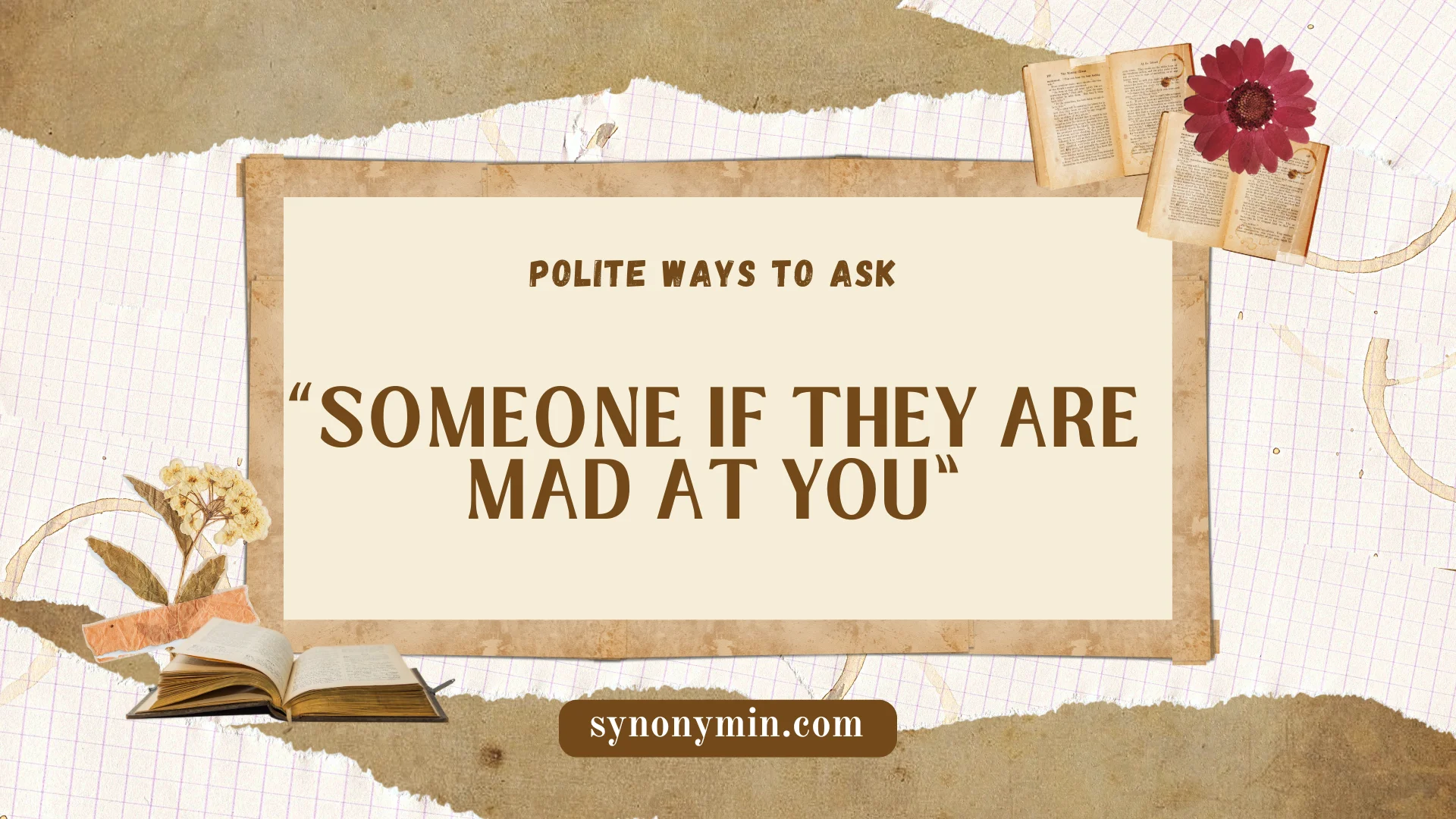
Navigating emotional tension—especially when you’re unsure whether someone is upset with you—requires a careful blend of clarity, respect, and emotional intelligence. Asking directly, “Are you mad at me?” can sometimes feel confrontational or too intense, especially in professional, social, or sensitive personal settings. Choosing the right wording not only encourages an honest response but also preserves trust and prevents misunderstandings. Below are polished, thoughtful, and effective alternatives you can use to approach the conversation with confidence and tact.
When Should You Use These Alternatives?
Use these alternatives when:
- You sense a shift in tone, responsiveness, or behavior.
- Communication feels strained, distant, or unusually short.
- You want to address tension without sounding accusatory.
- You prefer a mature, emotionally intelligent way to check in.
- You need to maintain professionalism or respect boundaries.
30+ Polite Ways to Ask Someone If They’re Mad at You
(Each phrase includes meaning, example, and why it works.)
1. “I noticed a shift in our conversation—are we okay?”
Meaning/Usage: A gentle way to address tension without assigning blame.
Example: “I noticed a shift in our conversation earlier today—are we okay?”
Why it works: It sounds caring rather than confrontational.
2. “I hope I didn’t say anything that came across the wrong way.”
Meaning: Acknowledges your concern while taking responsibility.
Example: “I hope I didn’t say anything earlier that came across the wrong way.”
Why it works: Shows emotional maturity and gives them room to clarify.
3. “If something I did bothered you, I’m open to talking about it.”
Meaning: Invites honesty without pressure.
Example: “If something I did bothered you, I’m open to talking about it.”
Why it works: Builds safety for open communication.
4. “I feel like I might have upset you—can we check in?”
Meaning: Expresses perception, not accusation.
Example: “I feel like I might have upset you—can we check in?”
Why it works: Uses “I feel” language to soften the tone.
5. “Everything good between us?”
Meaning: Casual yet thoughtful check-in.
Example: “Just checking—everything good between us?”
Why it works: Simple, low-pressure phrasing.
6. “Is now a good time to clear the air?”
Meaning: Respectfully asks if they’re open to discussion.
Example: “Is now a good time to clear the air if needed?”
Why it works: Gives them control over the timing.
7. “I value our relationship, so I wanted to check if anything feels off.”
Meaning: Emphasizes care and importance.
Example: “I value our relationship, so I wanted to check if anything feels off.”
Why it works: Reinforces positive intention.
8. “I sensed a bit of distance—did I misunderstand?”
Meaning: Checks your perception without placing blame.
Example: “I sensed a bit of distance today—did I misunderstand?”
Why it works: Opens space for clarification.
9. “I want to make sure I didn’t overstep earlier.”
Meaning: Addresses potential boundaries.
Example: “I want to make sure I didn’t overstep earlier during our discussion.”
Why it works: Respects personal space and accountability.
10. “If something feels off, I’m here to talk about it.”
Meaning: Invitation to communicate openly.
Example: “If something feels off, I’m here to talk about it.”
Why it works: Non-accusatory and supportive.
11. “Let me know if I said or did something that didn’t sit well with you.”
Meaning: Direct but still gentle.
Example: “Please let me know if I said or did something that didn’t sit well with you.”
Why it works: Encourages constructive feedback.
12. “I’ve been sensing some tension—are we on good terms?”
Meaning: Names the issue clearly but calmly.
Example: “I’ve been sensing some tension—are we on good terms?”
Why it works: Shows emotional awareness.
13. “I hope everything is okay between us.”
Meaning: Soft, caring check-in.
Example: “I hope everything is okay between us after our last conversation.”
Why it works: Non-threatening and empathetic.
14. “If I miscommunicated earlier, I’d appreciate your feedback.”
Meaning: Recognizes communication errors.
Example: “If I miscommunicated earlier, I’d appreciate your feedback.”
Why it works: Invites resolution rather than conflict.
15. “It feels like something might be bothering you—want to talk?”
Meaning: Shows concern for their feelings.
Example: “It feels like something might be bothering you—want to talk?”
Why it works: Prioritizes their emotional state.
16. “Can we revisit our earlier conversation? I want to make sure we’re aligned.”
Meaning: Used after a difficult or unclear exchange.
Example: “Can we revisit our earlier conversation? I want to make sure we’re aligned.”
Why it works: Professional and clarity-focused.
17. “Did I miss something that might have come across the wrong way?”
Meaning: Acknowledges potential oversight.
Example: “Did I miss something that might have come across the wrong way?”
Why it works: Shows self-awareness.
18. “I hope I didn’t leave the wrong impression.”
Meaning: Addresses misunderstandings gently.
Example: “I hope I didn’t leave the wrong impression with what I said earlier.”
Why it works: Smooth and diplomatic.
19. “I sensed your tone change—did I say something insensitive?”
Meaning: Addresses specific emotional cues.
Example: “I sensed your tone change—did I say something insensitive?”
Why it works: Demonstrates emotional attentiveness.
20. “I care about our communication—can we clarify anything from earlier?”
Meaning: Emphasizes transparent dialogue.
Example: “I care about our communication—can we clarify anything from earlier?”
Why it works: Conflict-neutral and solution-oriented.
21. “I’d like to check in—are we still good after earlier?”
Meaning: Light but direct.
Example: “Just wanted to check in—are we still good after our meeting earlier?”
Why it works: Friendly and straightforward.
22. “I respect your feelings—let me know if something I said didn’t sit right.”
Meaning: Validates emotions.
Example: “I respect your feelings—let me know if something I said didn’t sit right.”
Why it works: Shows emotional respect.
23. “If you need space, I understand—just let me know if anything’s wrong.”
Meaning: Acknowledges both emotional needs and concern.
Example: “If you need space, I understand—just let me know if anything’s wrong.”
Why it works: Removes pressure while opening the door to communication.
24. “We seemed a bit off earlier—want to touch base?”
Meaning: Professional and concise.
Example: “We seemed a bit off earlier—want to touch base?”
Why it works: Clean and non-emotional.
25. “I value clear communication—can we talk if something’s bothering you?”
Meaning: Encourages transparency.
Example: “I value clear communication—can we talk if something’s bothering you?”
Why it works: Sets a constructive tone.
26. “I’m here if something’s weighing on you.”
Meaning: Caring and non-invasive.
Example: “I’m here if something’s weighing on you.”
Why it works: Supportive without pressure.
27. “I want to make sure I’m not misreading things—are we good?”
Meaning: Checks assumptions tactfully.
Example: “I want to make sure I’m not misreading things—are we good?”
Why it works: Balanced and emotionally intelligent.
28. “Is everything alright? You seemed a bit quiet earlier.”
Meaning: Points to observable behavior.
Example: “Is everything alright? You seemed a bit quiet earlier.”
Why it works: Neutral, fact-based observation.
29. “If you have concerns, I’m open to hearing them.”
Meaning: Gives them space to express themselves.
Example: “If you have concerns, I’m open to hearing them.”
Why it works: Encourages dialogue.
30. “I want to check in about our interaction earlier—how are you feeling about it now?”
Meaning: Follow-up after tension.
Example: “I want to check in about our interaction earlier—how are you feeling about it now?”
Why it works: Encourages emotional clarity.
31. “I care about our connection—did anything I said land wrong?”
Meaning: Combines care with accountability.
Example: “I care about our connection—did anything I said land wrong?”
Why it works: Warm and sincere.
32. “If there’s something we should talk through, I’m willing.”
Meaning: Invites resolution.
Example: “If there’s something we should talk through, I’m willing.”
Why it works: Collaborative and calm.
Quick One-Line Templates
- “Just checking—are we good?”
- “I hope I didn’t say anything that upset you.”
- “If something feels off, I’m here to talk.”
- “Let me know if I misunderstood anything earlier.”
- “I sensed some tension—are we okay?”
- “If I overstepped, I’d appreciate you telling me.”
- “I want to make sure we’re still on the same page.”
Common Mistakes to Avoid
- Using accusatory language like “You’re acting weird” or “Why are you mad?”
- Timing the conversation poorly, e.g., during stress or public moments.
- Guessing their emotions instead of asking open-endedly.
- Apologizing excessively, which can escalate tension or miscommunication.
- Avoiding the conversation, allowing assumptions to grow.
FAQ
1. Is it rude to ask someone if they’re mad at you?
Not if you phrase it thoughtfully. Polite wording shows respect and emotional awareness.
2. How do I ask without sounding insecure?
Use neutral, balanced language like “I want to make sure we’re on the same page.”
3. What if they deny being upset but still act distant?
Give them space and revisit later. Sometimes people need time to process.
4. Should I apologize even if I’m not sure I did something wrong?
You can acknowledge concern without admitting fault: “I hope nothing I said felt off.”
5. What if the person gets defensive?
Stay calm, clarify your intentions, and emphasize that you’re checking in—not accusing.
Conclusion
Tension—real or perceived—can strain even strong relationships. Asking someone if they’re mad at you doesn’t need to feel awkward or emotionally heavy. With the right tone and wording, you can approach the conversation with confidence, clarity, and empathy. These alternatives help you communicate thoughtfully, protect your relationships, and ensure misunderstandings don’t silently grow into larger issues. Clear, kind communication is always the most powerful tool in maintaining trust and connection.
DISCOVER MORE ARTICLES
35+ Other Ways to Say “I Wish You the Best”
Formal Synonyms for “Special Thanks”: 40+ Professional Alternatives
30 Professional Ways to Tell Your Boss You Got Another Job Offer