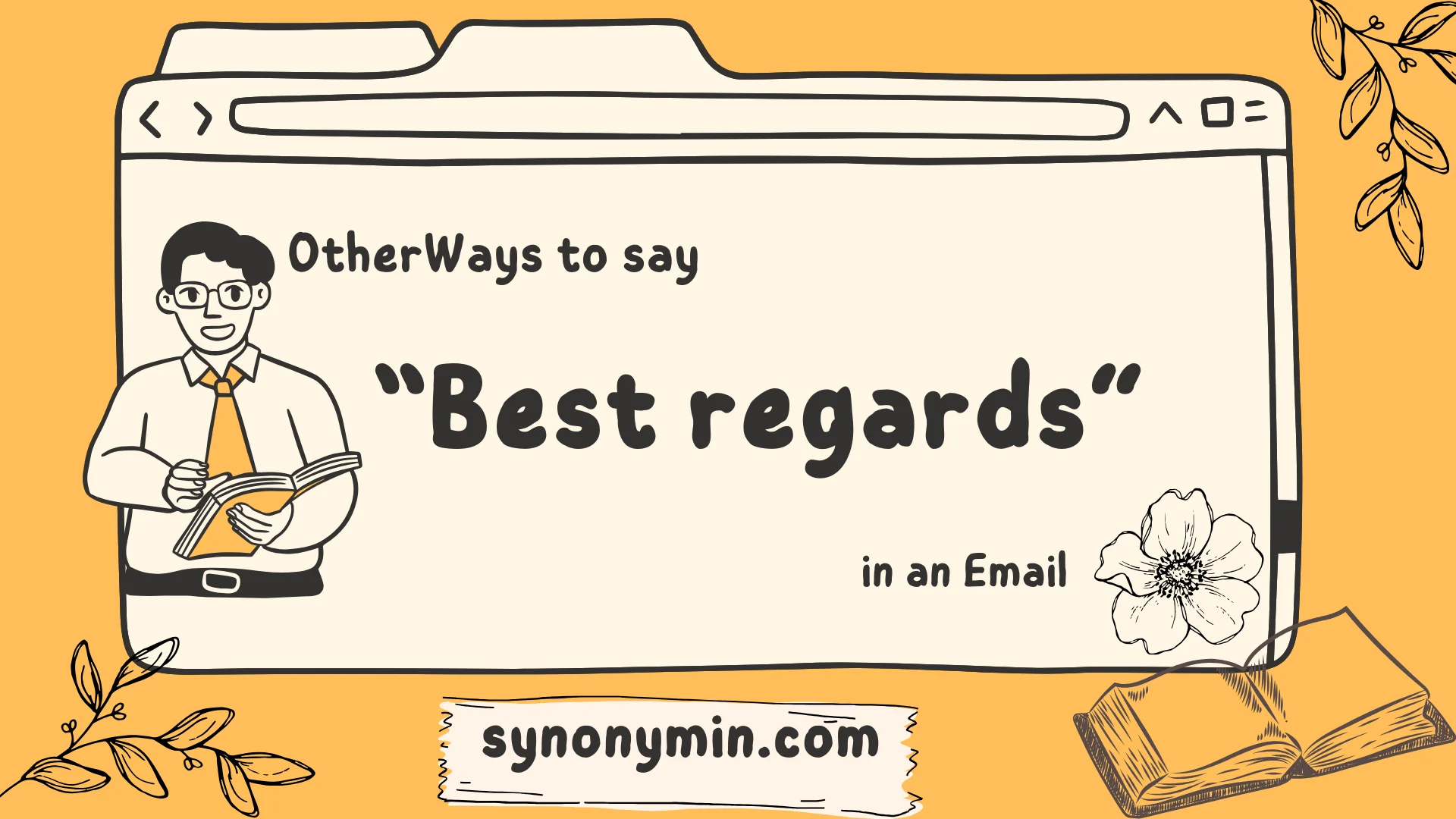
Your email closing sets the tone for how your message is received. While “Best regards” is polite and widely accepted, it’s also one of the most overused sign-offs in professional communication. Choosing the right alternative can make your email sound more intentional, polished, and aligned with your relationship to the reader—whether you’re writing to a client, professor, manager, or colleague.
This guide provides you with 35 modern, professional, and versatile alternatives to “Best regards,” complete with examples, meanings, and usage notes so you can choose the perfect sign-off every time.
When Should You Use These Alternatives?
Different messages call for different tones. Choose your closing based on:
- Professional/formal emails
Use polished closings like “Kind regards”, “Sincerely”, or “Respectfully.” - Emails to colleagues or internal teams
Use approachable closings like “Thanks,” “All the best,” or “Warm regards.” - Client-facing communication
Use refined closings like “Warm wishes,” “With appreciation,” or “Yours sincerely.” - Follow-up or reminder emails
Use concise closings like “Regards,” or “Thank you.”
Selecting the right sign-off elevates your professionalism and strengthens your communication.
Professional Alternatives to “Best Regards” (With Usage + Examples)
Below are 35 polished alternatives, each with meaning, an example, and why it works.
1. Kind regards
Meaning/Usage: A softer, polite alternative suitable for all professional settings.
Example: Kind regards, Jonathan
Why it works: Warm but still formal enough for business communication.
2. Warm regards
Meaning/Usage: Use when you want professionalism with a friendly tone.
Example: Warm regards, Sarah
Why it works: Shows sincerity without being overly casual.
3. Sincerely
Meaning/Usage: Common for formal or official emails.
Example: Sincerely, Mark Thompson
Why it works: Traditional, respectful, and universally accepted.
4. Regards
Meaning/Usage: A minimal, professional variation of “Best regards.”
Example: Regards, Daniel
Why it works: Direct and appropriate for neutral emails.
5. With appreciation
Meaning/Usage: Use when expressing gratitude.
Example: With appreciation, Mia
Why it works: Sounds thoughtful and respectful.
6. Many thanks
Meaning/Usage: Great for emails involving requests or help received.
Example: Many thanks, Christopher
Why it works: Shows genuine gratitude.
7. Thank you
Meaning/Usage: Appropriate for any email involving assistance.
Example: Thank you, Lina
Why it works: Simple, warm, and professional.
8. Thanks again
Meaning/Usage: For follow-up gratitude.
Example: Thanks again, Olivia
Why it works: Casual but workplace-friendly.
9. With gratitude
Meaning/Usage: A heartfelt option for academic or professional emails.
Example: With gratitude, Ava
Why it works: Polite and meaningful.
10. Respectfully
Meaning/Usage: Strong choice for formal emails, applications, or addressing senior staff.
Example: Respectfully, James Patel
Why it works: Highly courteous and formal.
11. Yours sincerely
Meaning/Usage: Formal sign-off for business or academic communication.
Example: Yours sincerely, Dr. Reed
Why it works: A traditional and respected closing.
12. Yours faithfully
Meaning/Usage: Used when writing to someone whose name you don’t know.
Example: Yours faithfully, Hiring Committee
Why it works: Maintains formality and convention.
13. All the best
Meaning/Usage: Friendly and modern; good for internal team communication.
Example: All the best, Sofia
Why it works: Warm tone without sounding unprofessional.
14. Best wishes
Meaning/Usage: Softer than “Best regards,” suitable for colleagues.
Example: Best wishes, Noah
Why it works: Positive and personable.
15. Warm wishes
Meaning/Usage: A more heartfelt alternative for long-term clients or colleagues.
Example: Warm wishes, Emma
Why it works: Balances kindness and professionalism.
16. With warm regards
Meaning/Usage: Ideal for messages that require warmth and sincerity.
Example: With warm regards, Hannah
Why it works: Polished and thoughtful.
17. Best
Meaning/Usage: Short and modern; popular in corporate environments.
Example: Best, Julian
Why it works: Clean and efficient.
18. Cheers
Meaning/Usage: Casual, friendly sign-off for colleagues.
Example: Cheers, Martin
Why it works: Relaxed and conversational (avoid for formal emails).
19. Looking forward
Meaning/Usage: Great when anticipating a response or next step.
Example: Looking forward, Elena
Why it works: Implies positivity and forward movement.
20. Looking forward to your response
Meaning/Usage: Polite and anticipatory.
Example: Looking forward to your response, Alex
Why it works: Encourages timely replies.
21. Yours truly
Meaning/Usage: Suitable for highly formal communication.
Example: Yours truly, Dr. Hayes
Why it works: Traditional and respectful.
22. With respect
Meaning/Usage: Use in sensitive or serious communications.
Example: With respect, Amelia
Why it works: Gentle and considerate.
23. Appreciatively
Meaning/Usage: When expressing gratitude professionally.
Example: Appreciatively, Sean
Why it works: Academically appropriate.
24. With sincere thanks
Meaning/Usage: For emails where appreciation is central.
Example: With sincere thanks, Grace
Why it works: Honest and warm.
25. Thank you in advance
Meaning/Usage: Use when requesting assistance or clarification.
Example: Thank you in advance, Ryan
Why it works: Polite but should be used sparingly.
26. Cordially
Meaning/Usage: Softer than “Sincerely,” good for formal invitations.
Example: Cordially, Margaret
Why it works: Elegant and traditional.
27. Cordially yours
Meaning/Usage: Slightly more formal than “Cordially.”
Example: Cordially yours, Benjamin
Why it works: Polished and refined.
28. With best wishes
Meaning/Usage: Polite and balanced for both formal and informal emails.
Example: With best wishes, Layla
Why it works: Warm and respectful.
29. Stay well
Meaning/Usage: Good for wellness-focused communication.
Example: Stay well, Penelope
Why it works: Modern and empathetic.
30. Take care
Meaning/Usage: Semi-formal and friendly.
Example: Take care, Mason
Why it works: Personal but safe for colleagues.
31. Sending my best
Meaning/Usage: Warm but still professional.
Example: Sending my best, Fiona
Why it works: Adds a human touch.
32. With my best
Meaning/Usage: Elegant version of “Best.”
Example: With my best, Adrian
Why it works: Unique and sophisticated.
33. Yours respectfully
Meaning/Usage: For formal situations or hierarchical communication.
Example: Yours respectfully, Natalie
Why it works: Strong tone of courtesy.
34. With appreciation and respect
Meaning/Usage: When thanking someone senior.
Example: With appreciation and respect, Samuel
Why it works: Sincere and refined.
35. Warmly
Meaning/Usage: Friendly but still polished.
Example: Warmly, Victoria
Why it works: Simple, modern, and versatile.
Quick One-Line Templates
- “Kind regards, and thank you for your time.”
- “With appreciation, looking forward to your response.”
- “Warm regards, and please let me know if you need anything further.”
- “Sincerely, thank you for your support.”
- “Best wishes, and wishing you a productive week ahead.”
- “Thank you, and I look forward to hearing from you.”
Common Mistakes to Avoid
- Using overly casual closings in formal emails
- Mixing tones (e.g., casual sign-off after a formal email)
- Using outdated phrases like “Yours obediently”
- Repeating the same sign-off in every email
- Forgetting your full name in professional emails
- Adding emojis in formal communication
FAQ
1. Is “Best regards” still acceptable?
Yes—but it’s overused. Modern alternatives can make your emails feel fresher and more intentional.
2. What’s the most professional alternative?
“Sincerely,” “Respectfully,” and “Kind regards” are the top formal options.
3. What closings should I avoid in business emails?
Overly casual ones like “Later!” or emojis.
4. Can I use different closings for different people?
Absolutely. Adjust based on your relationship and the tone of the email.
5. Should I use my full name or just my first name?
Use your full name for formal or first-time communication.
6. Can I use the same sign-off for every email?
You can—but variety improves clarity and tone.
Conclusion
Your email closing is more powerful than it seems—it shapes the final impression you leave. By choosing thoughtful alternatives to “Best regards,” you elevate clarity, tone, and professionalism. Whether you’re emailing a manager, client, professor, or colleague, the right sign-off helps reinforce credibility and build stronger communication habits.
With these polished alternatives, examples, and templates, you’re ready to craft emails that sound modern, respectful, and intentionally written.
DISCOVER MORE ARTICLES
How to Write a Thank You Email to Your Professor (30 Professional Alternatives)
25+ Professional Ways to Say “Thank You as Always” (With Examples)
27 Other Ways to Say “Please Sign and Return” (With Examples)