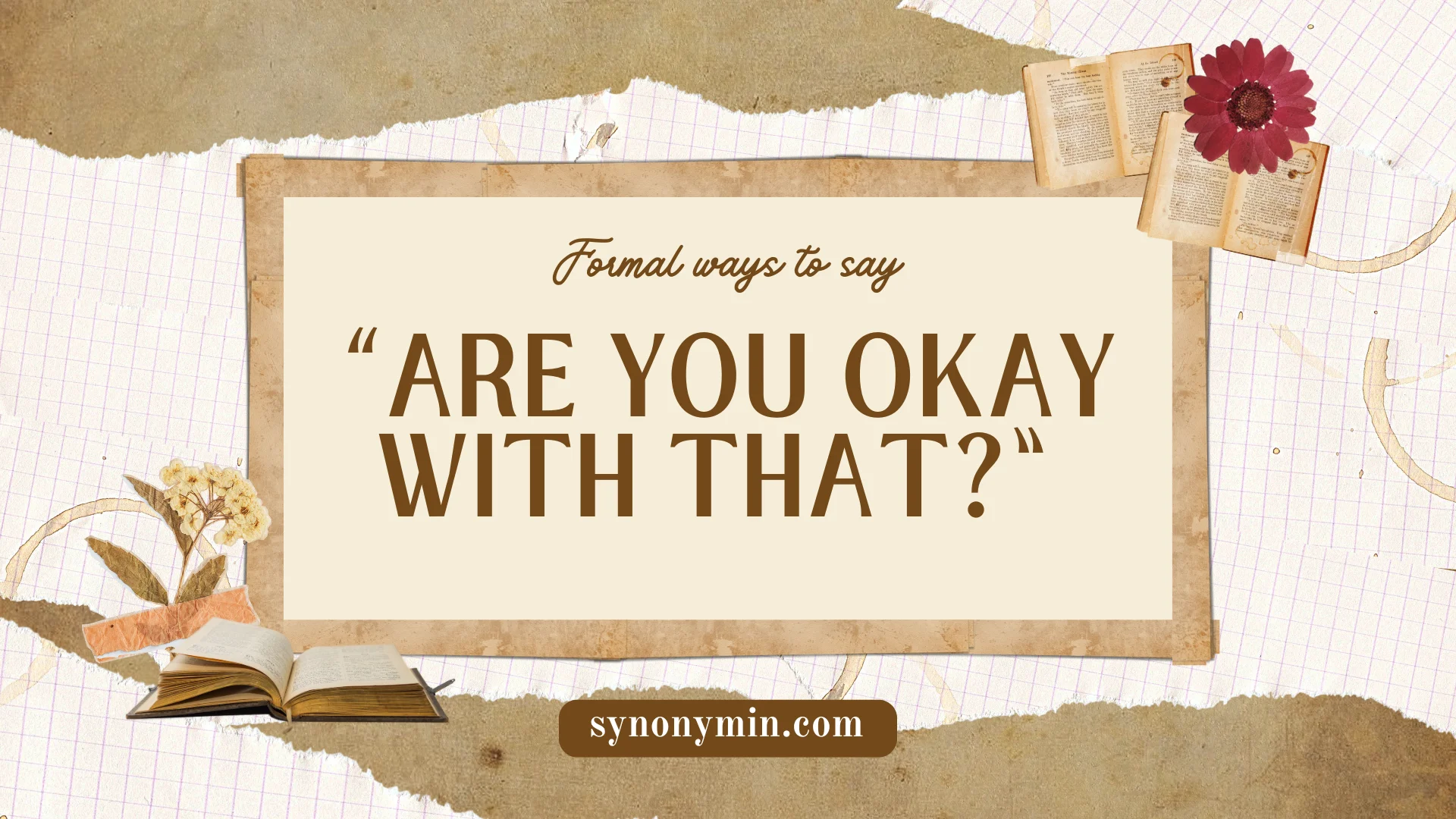
In professional communication, asking someone’s approval or confirming their agreement is essential—but the phrase “Are you okay with that?” often sounds too casual for business settings. Whether you’re coordinating with a client, finalizing a decision with leadership, or aligning with your team, choosing a formal and polished phrase helps you communicate with confidence, clarity, and professionalism.
This guide gives you 25+ formal, modern, and natural alternatives—each with meaning, examples, and quick guidance on when to use them. By the end, you’ll have refined phrases that elevate your emails, presentations, and workplace communication.
When Should You Use These Alternatives?
Different situations require different levels of formality. Choose your phrasing based on context:
For executive, client, or formal communication:
Use structured options like:
- “Would you be comfortable with this approach?”
- “Does this align with your expectations?”
For internal or team alignment:
Choose slightly softer phrasing like:
- “Does this work for you?”
- “Are you aligned with this plan?”
For policy, legal, or procedural approval:
Use authoritative alternatives:
- “Do you approve of this?”
- “Is this acceptable under your guidelines?”
Matching tone with context builds trust and demonstrates professionalism.
Professional Alternatives to “Are You Okay With That?”
Below are 25+ polished alternatives with meaning, examples, and why each one works.
1. Does this work for you?
Meaning: A polite way to confirm if someone agrees with a plan or detail.
Example: Please let me know if the updated schedule works for you.
Why it works: Professional yet approachable.
2. Would you be comfortable with this approach?
Meaning: Checking if someone agrees emotionally and professionally.
Example: Would you be comfortable with this approach before I proceed?
Why it works: Shows respect and consideration.
3. Is this acceptable to you?
Meaning: Formal confirmation of approval.
Example: Please confirm if these terms are acceptable to you.
Why it works: Strong, direct, and business-appropriate.
4. Do you approve of this?
Meaning: Asking for explicit authorization.
Example: Do you approve of this budget allocation?
Why it works: Ideal for hierarchical or decision-based communication.
5. Would this be suitable for you?
Meaning: Checks if something fits someone’s needs or expectations.
Example: Would Tuesday morning be suitable for you?
Why it works: Polite and flexible.
6. Does this align with your expectations?
Meaning: Ensures consistency with someone’s goals or preferences.
Example: Please confirm if this aligns with your expectations.
Why it works: Shows attention to standards and alignment.
7. Are you agreeable to this?
Meaning: A formal way to confirm acceptance.
Example: Are you agreeable to the updated deliverables?
Why it works: Very clear and diplomatic.
8. Would you be fine with this arrangement?
Meaning: Checks comfort with a plan or setup.
Example: Would you be fine with postponing the meeting to Thursday?
Why it works: Professional and straightforward.
9. May I confirm your approval on this?
Meaning: Seeks formal confirmation.
Example: May I confirm your approval on the proposed structure?
Why it works: Respectful and polished.
10. Does this meet your requirements?
Meaning: Ensures all criteria are satisfied.
Example: Kindly confirm if the attached design meets your requirements.
Why it works: Excellent for client communication.
11. Do you consent to this?
Meaning: Official acceptance.
Example: Do you consent to moving forward with this plan?
Why it works: Suitable for HR, legal, and compliance contexts.
12. Are you on board with this plan?
Meaning: Confirms support or agreement.
Example: Just checking—are you on board with this plan so we can proceed?
Why it works: Professional but friendly.
13. Will this timeline work for you?
Meaning: Asks if a deadline or schedule is suitable.
Example: Will this timeline work for you, or should we adjust it?
Why it works: Very practical in project management.
14. Would you agree to this adjustment?
Meaning: Seeks confirmation for a change.
Example: Would you agree to this adjustment in the proposal?
Why it works: Gentle and clear.
15. Is this arrangement satisfactory for you?
Meaning: Checks satisfaction with an arrangement.
Example: Please confirm if this arrangement is satisfactory for you.
Why it works: Formal and customer-friendly.
16. Are you fine proceeding this way?
Meaning: Confirms readiness to move forward.
Example: Are you fine proceeding this way with the final draft?
Why it works: Neutral and versatile.
17. Does this seem reasonable to you?
Meaning: Checks if something appears fair or logical.
Example: Does this seem reasonable to you before I finalize it?
Why it works: Shows collaboration.
18. Would this approach be acceptable?
Meaning: Checks if a method or plan is allowed or appropriate.
Example: Would this approach be acceptable for the next phase?
Why it works: Clear, professional, and neutral.
19. Are you comfortable moving forward with this?
Meaning: Confirms both agreement and readiness.
Example: Are you comfortable moving forward with this updated plan?
Why it works: Respectful and considerate.
20. May I proceed with this?
Meaning: Asking permission in a polished way.
Example: May I proceed with sending the documents?
Why it works: Ideal when seeking quick approval.
21. Would you like any changes before we proceed?
Meaning: Lets the person request adjustments.
Example: Would you like any changes before we proceed with deployment?
Why it works: Shows flexibility and customer care.
22. Are we aligned on this?
Meaning: Confirms mutual understanding.
Example: Just confirming—are we aligned on this plan?
Why it works: Excellent for team collaboration.
23. Is everything okay on your end regarding this?
Meaning: Confirms there are no issues or concerns.
Example: Is everything okay on your end regarding the proposal?
Why it works: Polite and thorough.
24. Would you confirm your agreement?
Meaning: Asks for direct confirmation.
Example: Please confirm your agreement before we finalize the timeline.
Why it works: Perfect for formal email sign-offs.
25. Does this proposal seem acceptable to you?
Meaning: Evaluates whether the offer meets expectations.
Example: Does this proposal seem acceptable to you as it stands?
Why it works: Ideal for clients and stakeholders.
26. Are you satisfied with this plan?
Meaning: Ensures contentment with a decision.
Example: Are you satisfied with this plan, or would you prefer an alternative?
Why it works: Customer-focused and polite.
27. Would you like me to proceed with this option?
Meaning: Seeks approval for a specific choice.
Example: Would you like me to proceed with this option for the layout?
Why it works: Shows initiative and clarity.
Quick One-Line Templates
- “Please confirm if this arrangement works for you.”
- “May I proceed with the following plan?”
- “Would you be comfortable with this approach?”
- “Does this align with your expectations?”
- “Kindly advise if the proposed timeline is acceptable.”
- “Are we aligned on the details below?”
Common Mistakes to Avoid
- Using phrases that sound too casual in formal settings.
- Not giving enough context before asking for approval.
- Using overly wordy or stiff phrasing that feels robotic.
- Assuming agreement instead of clearly confirming it.
- Repeating the same phrase in multiple emails or messages.
Keep your communication intentional, clear, and respectful.
FAQ
1. Is “Are you okay with that?” unprofessional?
Not always, but it can sound too casual. A more polished alternative is recommended for formal communication.
2. What’s the best phrase for clients?
Use structured options like “Does this meet your requirements?” or “Would this be suitable for you?”
3. What’s best for internal teams?
Friendly but professional options like “Does this work for you?” or “Are we aligned on this?”
4. Can I use casual phrasing with managers?
Yes—depending on workplace culture. But when in doubt, choose a more formal alternative.
5. What should I avoid when asking for approval?
Avoid vague language, casual slang, or assuming the person agrees without asking directly.
Final Thoughts
Asking for someone’s approval shouldn’t feel awkward or overly casual. By choosing clear, modern, and polished alternatives, you elevate your communication and ensure your message lands professionally—whether you’re coordinating with team members, clients, or executives.
DISCOVER MORE ARTICLES
25+ Polite Ways to Ask for a Meeting Place and Time (With Examples)
Professional Ways to Say “Please Let Me Know When Would Be a Convenient Time” (2026)
25+Formal Synonyms for “I Would Like to Know” (With Examples)